Biography
Scott Snibbe is a new media artist, author, and meditation teacher. His pioneering interactive art, held in the collections of New York MoMA and the Whitney Museum of American Art, has been exhibited worldwide in museums, public spaces, concert tours, and immersive installations. He has collaborated with Björk, Philip Glass, Beck, and James Cameron, creating innovative intersections of art, music, and technology.
As a leading figure in digital interactivity, Snibbe produced several groundbreaking art apps, including Gravilux, a number one app in Apple’s app store named “Best App of the Year”; and the world’s first “app album,” Björk: Biophilia. He was an early developer of Adobe After Effects and spent years at Paul Allen’s Interval Research Corporation researching interactive music, video, computer vision, and haptics.
A longtime student and teacher of Tibetan Buddhism, Snibbe is the executive director of the nonprofit Skeptic’s Path to Enlightenment and hosts its widely followed meditation podcast. In 2024, he released his first book, How to Train a Happy Mind, featuring a foreword by the Dalai Lama.
Snibbe has received the Webby and Ars Electronica awards and grants from the National Science Foundation, the Ford Foundation, the National Endowment for the Arts, and the Rockefeller Foundation. He holds over thirty patents and has served as an advisor to The Institute for the Future and The Sundance Institute. He has held teaching and research positions at UC Berkeley, NYU’s Courant Institute of Mathematics, San Francisco Art Institute, and California Institute for the Arts, and is currently a board member of Tibet House NYC.
Artist's CV
Artist's Statement
The purpose of my work is to bring meaning and joy to people’s lives. Often interactive, my art invites viewers to physically engage with diverse media including mobile devices, digital projections, and electromechanical sculpture. Through interactivity, I hope to promote an understanding of the world as interdependent, challenging the illusion that we each exist in isolation from anyone else or the rest of reality.
Humans often perceive themselves as embodied beings acting separately from their environment and others. However, even the body each of us identifies as “me” is composed entirely of non-self elements: skin, cells, our parents’ genes, food, water, and atoms forged in ancient stars. These parts are in constant exchange with our environment and other bodies through eating, respiration, and genetics. Our minds are similarly dependent, shaped continuously by language, thoughts, and memories that only emerge from our interactions with others. Even in solitude, the imprints of our lifetime’s interactions propel our thoughts and memories. This view of interdependence, long central to Buddhist philosophy, aligns with recent insights from neuroscience, social psychology, and complexity theory.
Much of my interactive artwork explores this interdependence through physical engagement. Many pieces only function when viewers participate—by touching, moving, or breathing. This makes viewers essential to the work’s existence as art. While my projects often incorporate advanced technologies, they are not about technology, and viewers’ most profound experiences occur through human-to-human interactions. In public settings, the works provoke social connection, transforming human connection into a vital part of the artwork itself. In more intimate contexts, the experiences encourage concentrated creative attention, reminiscent of meditation or artistic practice.
The inherently time-based nature of interactivity reflects my background in film and animation. The frame-by-frame construction of cinematic movement taught me how subtle changes in timing influence perception and emotion. I apply this principle to human-technology interactions, encoding responses not as frames of film, but as dynamic computer instructions. These instructions continually reinterpret and adapt, creating experiences that evolve in real time based on viewers’ presence.
Although my work conveys complex ideas, my process is minimalist and subtractive: I gradually remove elements until only those essential to a work’s meaning remain. I combine this approach with the principles of phenomenology: the philosophy of how a body “thinks” through unmediated perception, rather than through reason and language. Participants experience the meaning of my works primarily through visceral, intuitive awareness, which, in the words of the philosopher Maurice Merleau-Ponty: “gives us at every moment a global, practical, and implicit notion of the relation between our body and things.” This approach rewards viewers with an immediate sense of presence, fostering openness and curiosity that invite them to explore a work’s motivation and meaning.
The artists who inspire my work also share a passion for time-based minimalism and phenomenology. First and foremost are experimental and abstract filmmakers like Len Lye, who created direct cinema by scratching and marking celluloid film directly with his body. Lye and other abstract film pioneers like Oskar Fischinger and Moholy-Nagy, revealed that it is possible to create sophisticated, emotional time-based work without resorting to representation. The minimalist art of light and space, most notably that of Robert Irwin and James Turrell, has also guided my exploration of how subtle changes in an environment can make deep impressions on the viewer. Building on these traditions, I create interactive environments, both on screens and in physical space, that respond meaningfully to viewers’ presence and encourage focused awareness.
Ultimately, my art aspires to dissolve the boundaries between self and other, art and audience. By fostering interdependence and presence, I hope to inspire human connection and a deeper understanding of our shared reality.
Select essays by and about the artist
Early Influences (2003). Catalog Essay. Uijeongbu Digital Art Festival. South Korea.
Body, Screen and Shadow (2003). San Francisco Media Arts Council (SMAC) Journal.
Computation and Improvisation (2002). ICC Journal. Tokyo, Japan.
Useless Programs, Useful Programmers, and the production of Social Interactive Artworks (2006), Interview with Roberto Simanowski. Dichtung Digital.
Visceral Cinema: Chien (2005). Exhibition Catalog. Christiane Paul, Whitney Museum; Tom Leeser, CalArts; Fiona Whitton, TELIC Gallery. Los Angeles, CA.
Art Wants to be Ninety-Nine Cents (2010)
Music of Chance (2011)
Photos
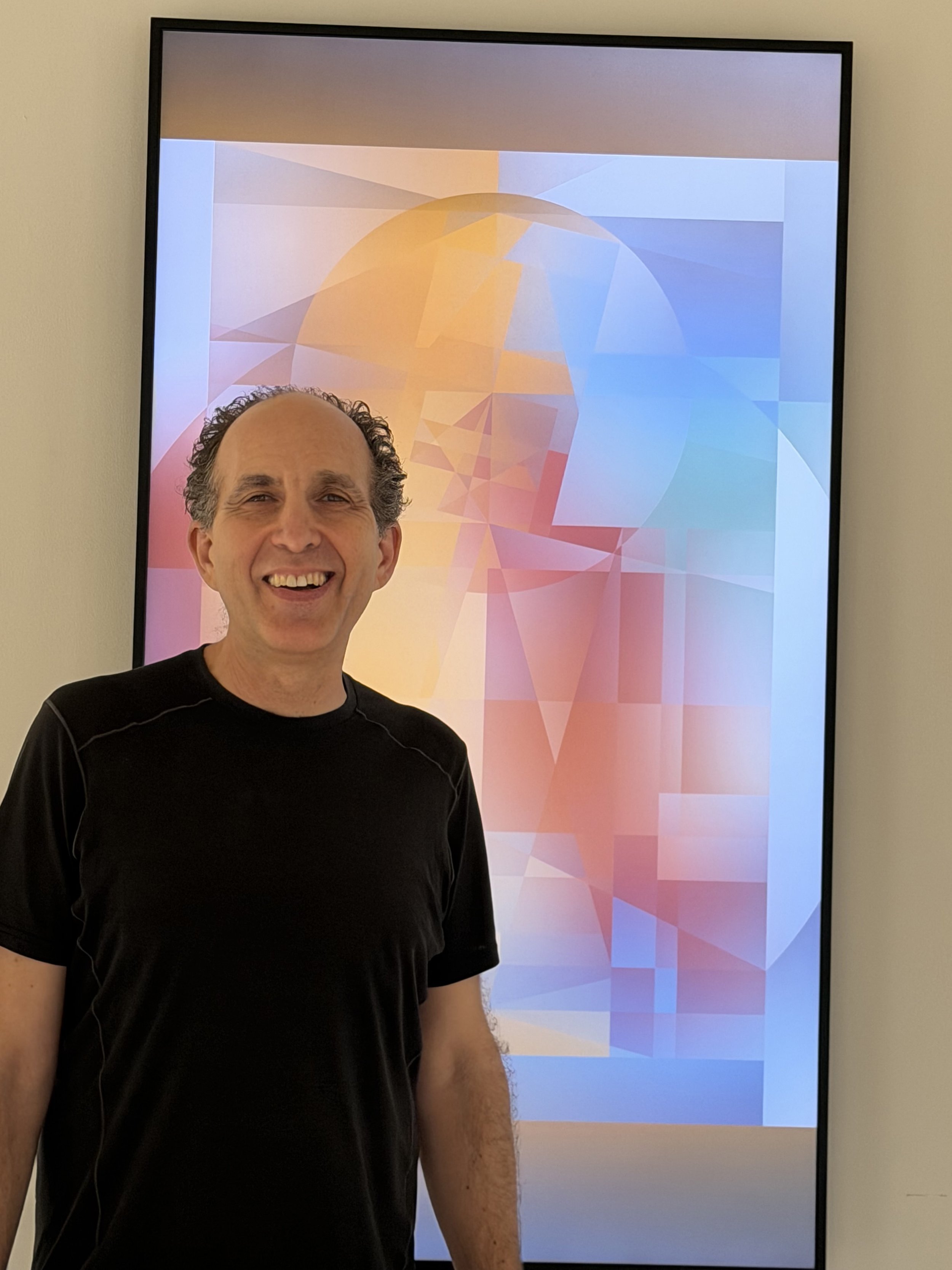
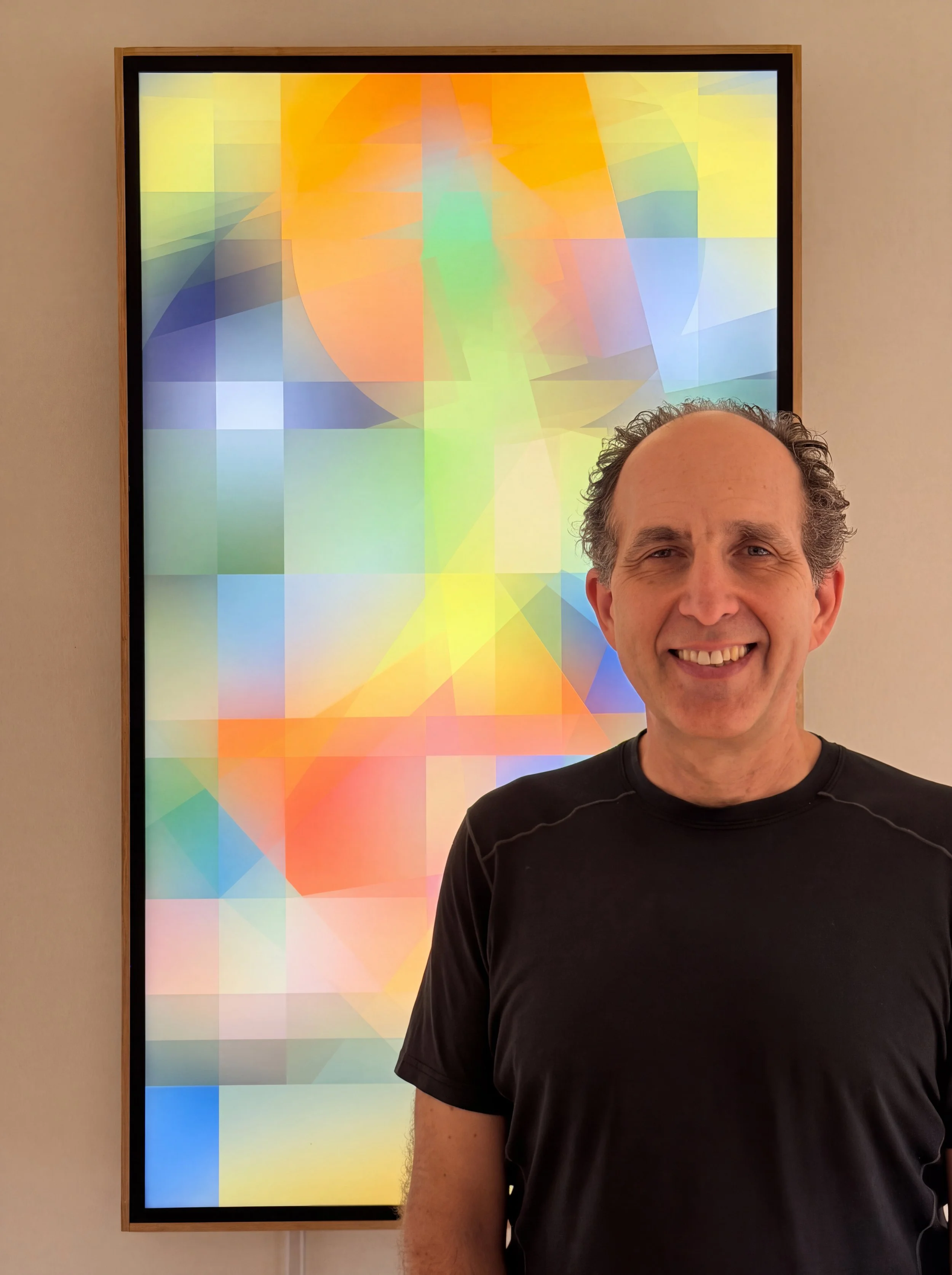



EXHIBITIONS AND COLLECTIONS
PERMANENT INSTALLATIONS AND COLLECTIONS
Museum of Modern Art, New York
Whitney Museum of American Art, New York
Arizona State University Museum of Art
Tokyo Intercommunications Center
Mills College, California
London Science Museum
Phaeno Museum, Germany
Cité de Sciences, Paris, France
Yahoo! Corporation, California
Private collections worldwide
SELECTED GROUP EXHIBITIONS
2026
CODeDOC, Whitney Museum of American Art, November, 2026 — February, 2027
Healing Geometry, Headlands Institute for the Arts, September - November, 2026
Full Disclosure: The Edge of Information Design, Museum of Modern Art, New York City, September, 2026 - June, 2027
International Association for Tibetan Studies, Kathmandu Nepal, August 2026
Love, TIAT Gallery, San Francisco, California, January, 2026
2025
Innaugural Exhibition, TIAT Gallery, San Francisco, California, November, 2025
Mythology of Tomorrow, 120710 Gallery, Berkeley, California, October, 2025
2023
Never Alone: Video Games and Other Interactive Design, Museum of Modern Art, New York City, September 2022 - Summer, 2023
2022
SWARM, Science Gallery Melbourne, August - December, 2022
2019
Mobile Art, Modern and Contemporary Art Fund of Montluçon, Paris, France April - June 2019
2017
Mobile Art, Parisian Art Fair Art Elysees, October, 2017
2016
Digital Abstractions, House of Electronic Arts Basel, April - May, 2016
Art of the App, Louisiana State University, February - March, 2016
This Is for Everyone: Design Experiments for the Common Good, The Museum of Modern Art, New York, February, 2015 - January, 2016
2015
Björk, The Museum of Modern Art, New York, March – May, 2015
NEAT: New Experiments in Art and Technology, Conteporary Jewish Museum, October – December, 2015
Digital Revolution, Onassis Cultural Center, Athens, Greece, October – December, 2015
2014
MoogFest, April 2014
Poetic Codings, San Jose Museum of Art, September May – September, 2014
Digital Revolution, Barbican Institute, London, July – September 2014
2013
Sound in Space, The Museum of Modern Art, New York, October – November, 2013
Sonar Festival, June 2013
Poetic Codings, Fellows of Contemporary Art Curators, Los Angeles, March 2013
2012
Los Angeles International Airport
2011
Björk Biophilia Concert Tour visuals
Björk Biophilia App Album
Future/Canvas, San Francisco, February, 2011
Arizona State University, March, 2011
FILE Festival, Sao Paolo, Brazil, 2011
2010
Action! Design over Time, Museum of Modern Art, New York, February, 2010 - January, 2011
Art Rock 2010. St. Brieuc, France. May, 2010
San Francisco Fine Art Fair, with Zero1 Art and Technology Network. May, 2010
2008
Act React. Milwaukee Art Museum. October, 2008 – April, 2009
Art Rock 2008. St. Brieuc, France. May, 2008
Design and the Elastic Mind. Museum of Modern Art. New York, NY. February-May, 2008
Digital Art & Magic Moments. Shanghai eARTS Festival, 2007
2007
Metalandscapes. Miró Foundation, Mallorca, Spain, October 2007
From Mind to Hand: Artists and Graphology. Triple Base. San Francisco, California. May, 2007
Our Distance From Things. Telic Arts Exchange. Los Angeles, California. March, 2007
Play Innovation. Kitakyushu Innovation Gallery. Kitakyushu City, Japan. April-July, 2007
2006
South Korea Media Art Biennial. October, 2006
International Symposium on Electronic Art / Zero One Festival. San Jose, California. August, 2006 Global Economic Forum. San Jose, California. August, 2006
Thread. Artspace New Haven, Connecticut. June, 2006
Art & Technology Zone. Tokyo Intercommunications Center. May, 2006
Israel Museum. Jerusalem, Israel. May, 2006
2005
L'ombre a la portée des enfants: Ombres et lumière. Cite des sciences et de l'industrie. Paris, France. October, 2005
Hybrid Creatures and Paradox Machines. Ars Electronica 2005 California Institute of the Arts. April, 2005
Artefact. Belgium. February, 2005
Tilt. Perpignan, France. February, 2005
2004
Ars Numerica. Montbeliard, France. December, 2004
Reactive. Rx Gallery. San Francisco. November, 2004
MAIS: Exposition d'Installations Interactives. Brussels, Belgium. October, 2004
Art Life. The Exploratorium. San Francisco. October, 2004
Le Channel, scène nationale de Calais. France. September, 2004
Villette Numerique. La Villette. Paris, France. September, 2004
Institute of Modern Art. Brisbane, Australia. October, 2004
Biennale of Electronic Arts Perth. Fremantle, Australia. September, 2004
Eastern Illinois University. September, 2004
Social Construction. Southern Exposure. San Francisco, CA. May 2004 (curator)
Art Rock 2004. Brittany, France. May, 2004
Dreaming Butterfly: Digital Playground. Nabi Art Center. Seoul, South Korea. April – August, 2004
Contemporary Arts Services Trust. Tasmania, Australia. April, 2004
The Art of Digital Resistance. Version>04. Chicago, Illinois. April, 2004
2003
Uijeongbu International Digital Art Festival. South Korea. October, 2003
Ars Electronica 2003. Linz, Austria. September, 2003
House of Tomorrow. Experimenta. Victorian Arts Centre, Australia. September 2003
Dialogue with Light and Shadow. Toki Messe. Nigata, Japan. April 2003
Reactive Art, San Francisco Media Arts Coalition, San Francisco Museum of Modern Art. January 2003
2002
Legends of Interactivity, The Kitchen, New York City. November 2002
Carnivore, Eyebeam, New York City. October, 2002
NewFangle, GenArtSF, San Francisco. October – December, 2002
Time Share, Art Interactive, Cambridge, Massachusetts. September, 2002
911+1: The Perplexities of Security, Watson Institute for International Studies. Providence, RI. September, 2002
Ars Electronica 2002, NetArt 2002 exhibition. Linz, Austria. September, 2002
CODeDOC, Whitney Museum Artport. September, 2002
Arte Digital IV, Havana, Cuba. June – July 2002
Innaugural Exhibition, Shizuoka Arts Center, Tokyo, Japan. March, 2002
Refresh. Institute of Contemporary Arts, London. February – March, 2002
New Frontiers. Art Association Gallery, Jackson Hole, WY. January, 2002
2001
bienalle.net. Jeffrey Deitch Projects, Brooklyn, NY. November 5-7, 2001
Mathematica. The Exploratorium, San Francisco, California. October 6, 2001 - May 5, 2002
Tirana Biennale. Tirana, Albania. September 1 - October 15, 2001
Only The Lonely. Foro Artistico, Hanover, Germany. August 31 - September 23, 2001
LifeLike. New Langton Arts, San Francisco. June 27 - July 28, 2001.
2000
Refresh: The Art of the Screen Saver. Cantor Center for the Visual Arts, Stanford University. October 12 – November 26, 2000
Transmediale 2000. In conjunction with the Berliner Filmfestspiele. February, 2000. Berlin, Germany.
1999
Adding Media / Subtracting Signs. NTT Intercommunications Center (ICC). Tokyo, Japan. 22 June - 20 July, 1999
Organic Information: Work from the Aesthetics and Computation Program at the MIT Media Laboratory.
Art Directors Club Gallery. New York City. May 6-27, 1999
Interaction ‘99. International Academy of Media Arts and Sciences (IAMAS). Ogaki City, Gifu, Japan. March 5-14, 1999
1998
Inaugural Exhibition. Center of the Edge Gallery. The Tech Museum. San Jose, California. October 98 - April 99
Ars Electronica 98. Cyberarts 98 exhibition. Linz, Austria. September, 1998
Motion Phone Urban Installation. Stuttgart Filmwinter 98. Germany. March, 1998
1997
WRO ’97. Wroclaw, Poland. March, 1997
Vienna Global Village ‘97. Vienna, Austria. April, 1997
1996
Ars Electronica 96. Cyberarts 96 exhibition. Linz, Austria. September, 1996
1995
SIGGRAPH 95 Interactive Communities. Los Angeles, CA. August 1995
SELECTED SOLO EXHIBITIONS
2008
Falling Girl. Berkeley Art Museum. Summer, 2008
2006
Body, Space and Cinema. London Institute of Contemporary Arts. May, 2006
Deep Walls. Brown University. March, 2006
2005
Visceral Cinema: Chien. Telic. Los Angeles, CA. September, 2005
Body Language. Art Interactive. Boston, MA. April, 2005
Blow Up. Yerba Buena Center for the Arts. San Francisco, CA. January, 2005
2004
Presence/Absence. Tarble Arts Center. Eastern Illinois University. October, 2004
Interdependence. Arizona State University. January, 2004
2003
Screen Series. Beall Center for Art & Technology. Irvine, CA. November, 2003
SELECTED COMMISIONS
2010
“Transit”, for the Los Angeles International Airport Arrivals Terminal
2007
“Women Hold Up Half the Sky”, for Mills College. Oakland, California
“Social Light”, for London Science Museum
2006
“Cabspotting”, for The Exploratorium / National Endowment for the Arts
“Shadow Mosaic 5x4”, for Yahoo Corporation, Sunnyvale, CA
2005
“Outward Mosaic #1”, for Amelia Chenoweth
“Central Mosaic”, for Cité de Sciences, Paris, France
“Blow Up”, for Yerba Buena Center for the Arts. San Francisco, CA
2004
“You Are Here”, for New York Hall of Science. New York City
“Near”, for New York Hall of Science. New York City
2003
Computerfinearts.com, Doron Golan. New York City
2002
“Shadow”, for Art Interactive. Boston, MA
“Fuel”, for Carnivore as part of the Radical Software Group. New York City
”Tripolar”, for CODeDOC, The Whitney Museum of American Art. New York City
2001
“It’s Out”, for Tirana Biennial. Tirana, Albania
1999
“Emptiness is Form”, for Refresh: The Art of the Screensaver. Stanford University, California