Selected Works
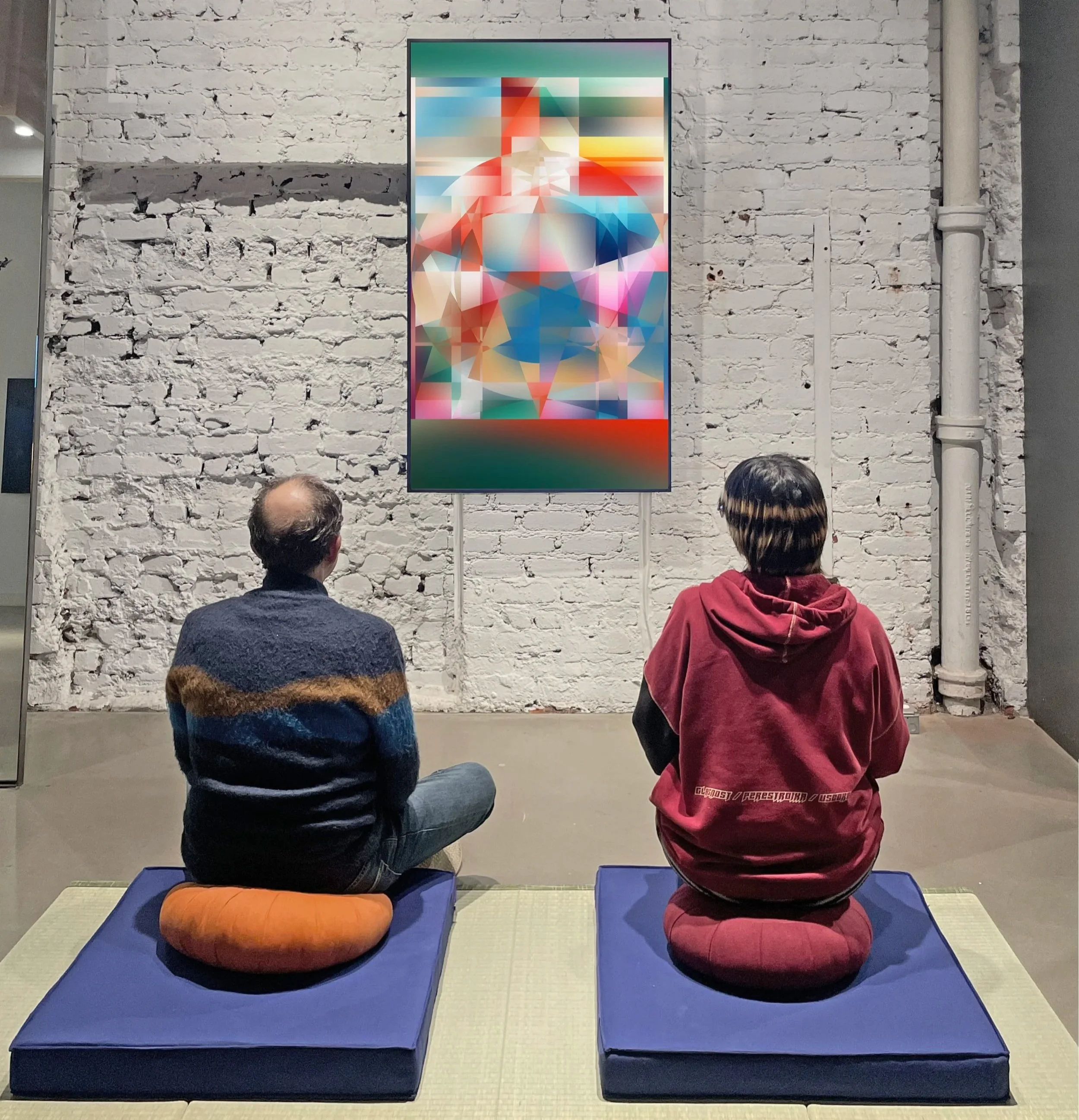
Hidden Geometries (2023→)
Based on the ancient geometry underlying Tibetan Buddhist thangka paintings, the Hidden Geometries series includes time-based wall-mounted screens, digital prints, and paintings created with traditional Himalayan mineral pigments.
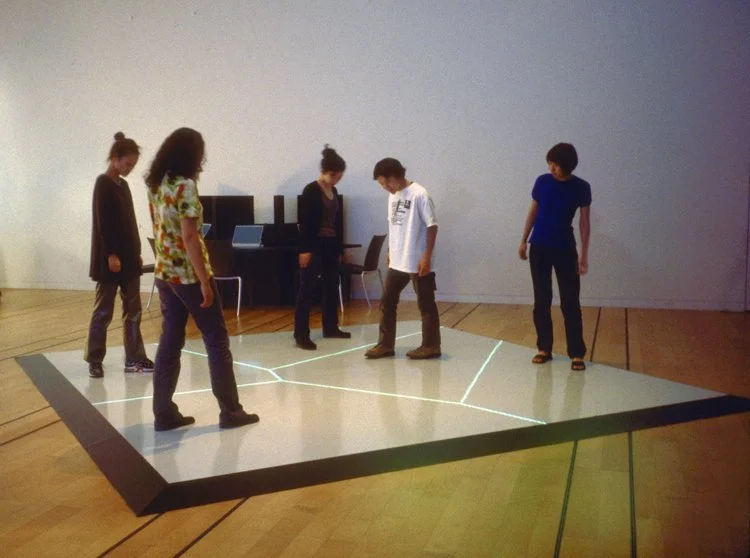
Boundary Functions (1998)
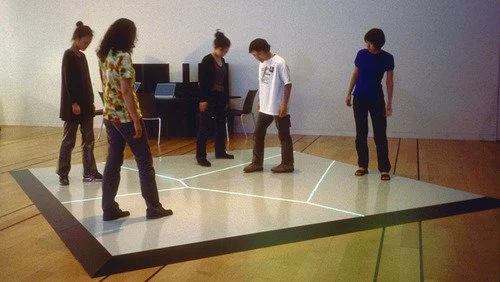
Boundary Functions visualizes people’s personal space as they move around a raised floor. The piece shows how personal space, though we call it our own, is only dependent on others and changes without our control. It’s a “radical” work of social interactive art that only functions if more than one person is present on its surface. Boundary Functions is one of the first interactive projections, using artificial intelligence and computer vision to track people’s movements and respond with digital projection.
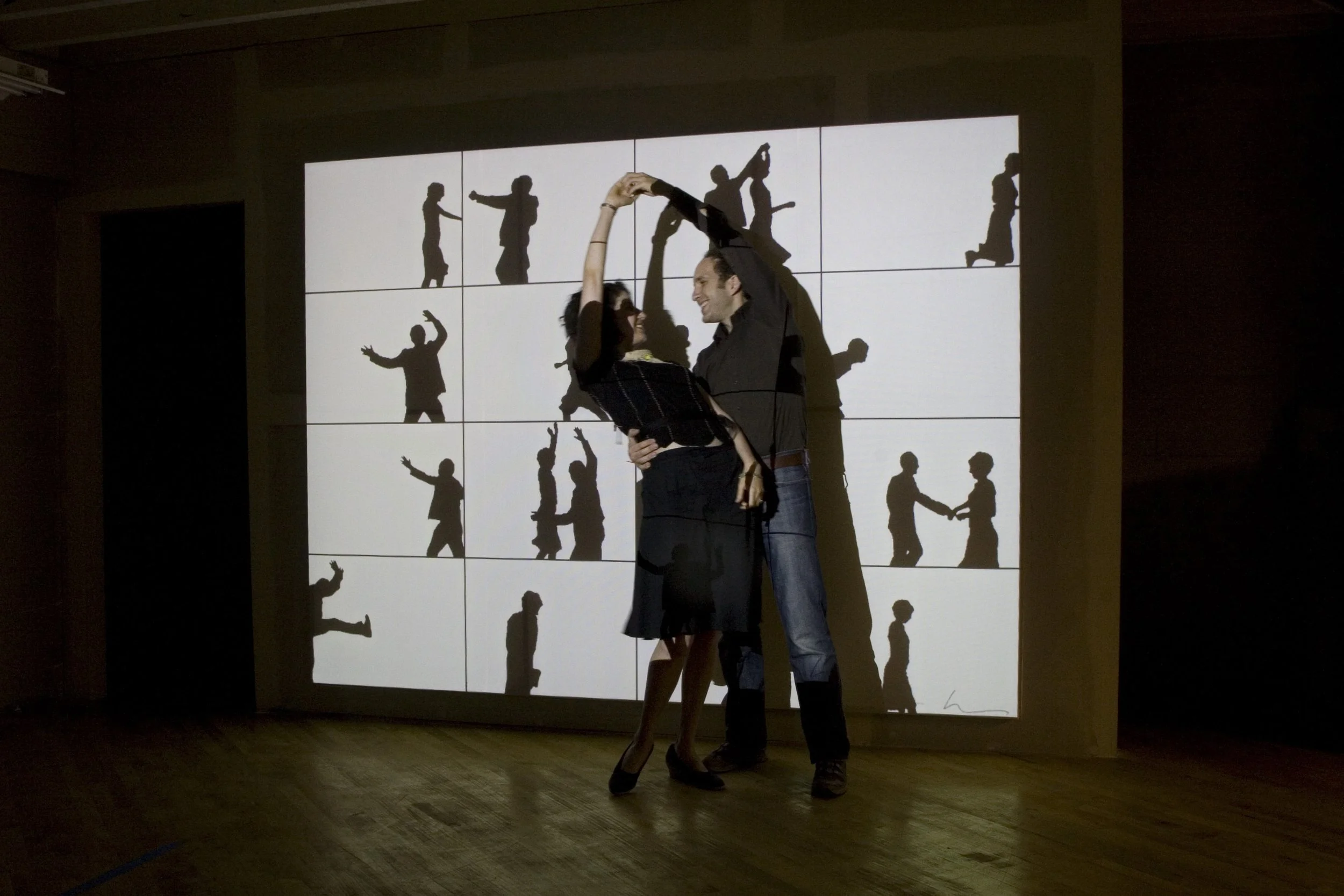
Deep Walls (2002)
Deep Walls is an interactive projection screen where the shadows of people who move in front of it are captures as silhouettes that play back in one of 16 rectangles. With references to Andy Warhol’s pop art grids, minimalist light artists, and structuralist films, Deep Walls uses surveillance technologies to connect, rather than control its audience. The power of the silhouette in Deep Walls means that viewers can recognize themselves and their friends, while remaining anonymous to others, in a use of surveillance technology that still respects privacy.
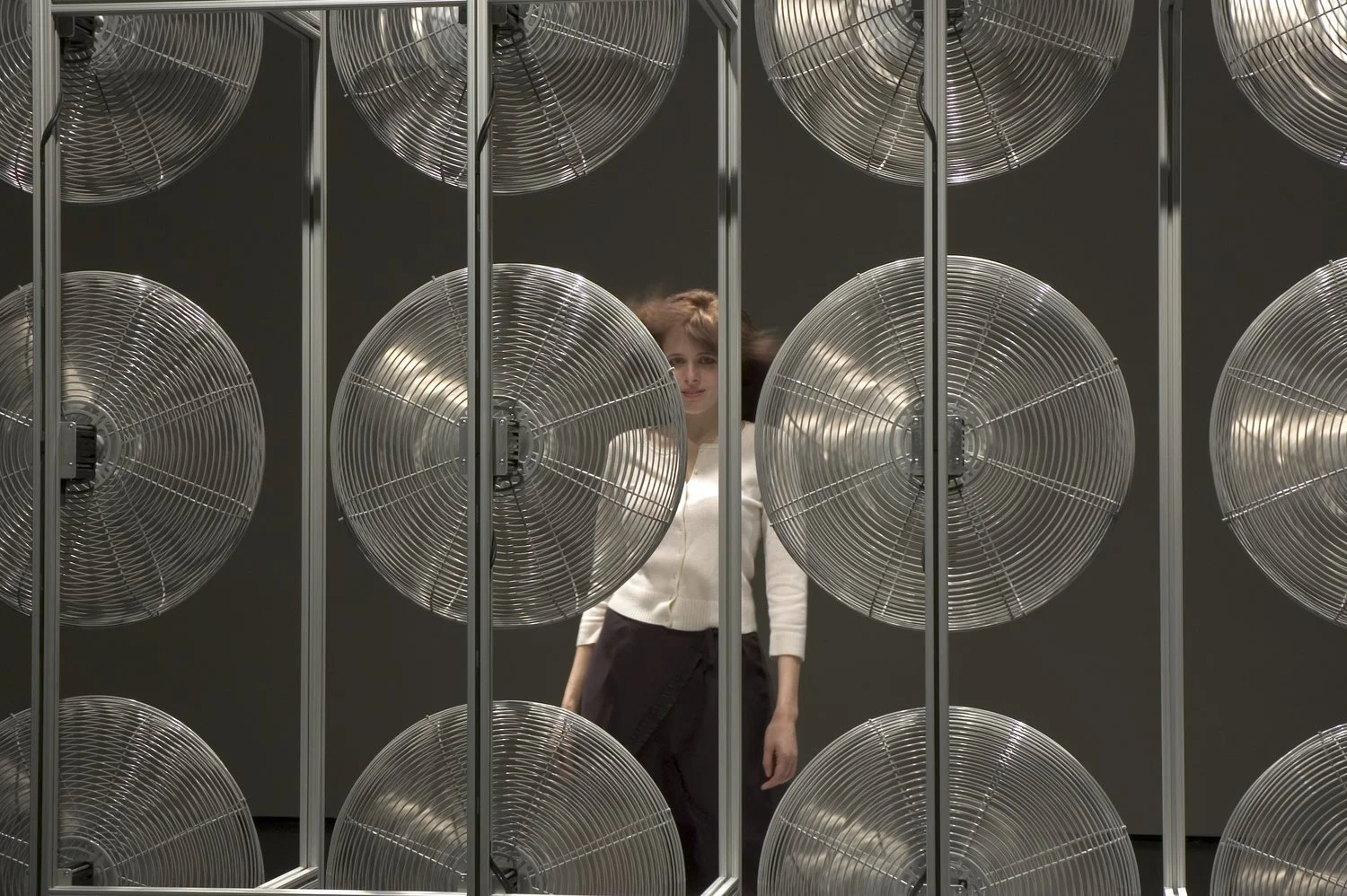
Blow Up (2005)
Blow Up is an interactive wall where breath is amplified into a field of wind, played back in sampled “breath loops.” It’s rare to say “breath” without adding “my breath.” However, breath is the aspect of ourselves that is in most continuous exchange with others. After a few minutes in a room with other people, we’ve each literally exchanged ourselves with others, inhaling parts of them and exhaling parts of us. This piece, part of a larger series on breath, shows the interdependent, public nature of breathing.
Motion Phone (1995)
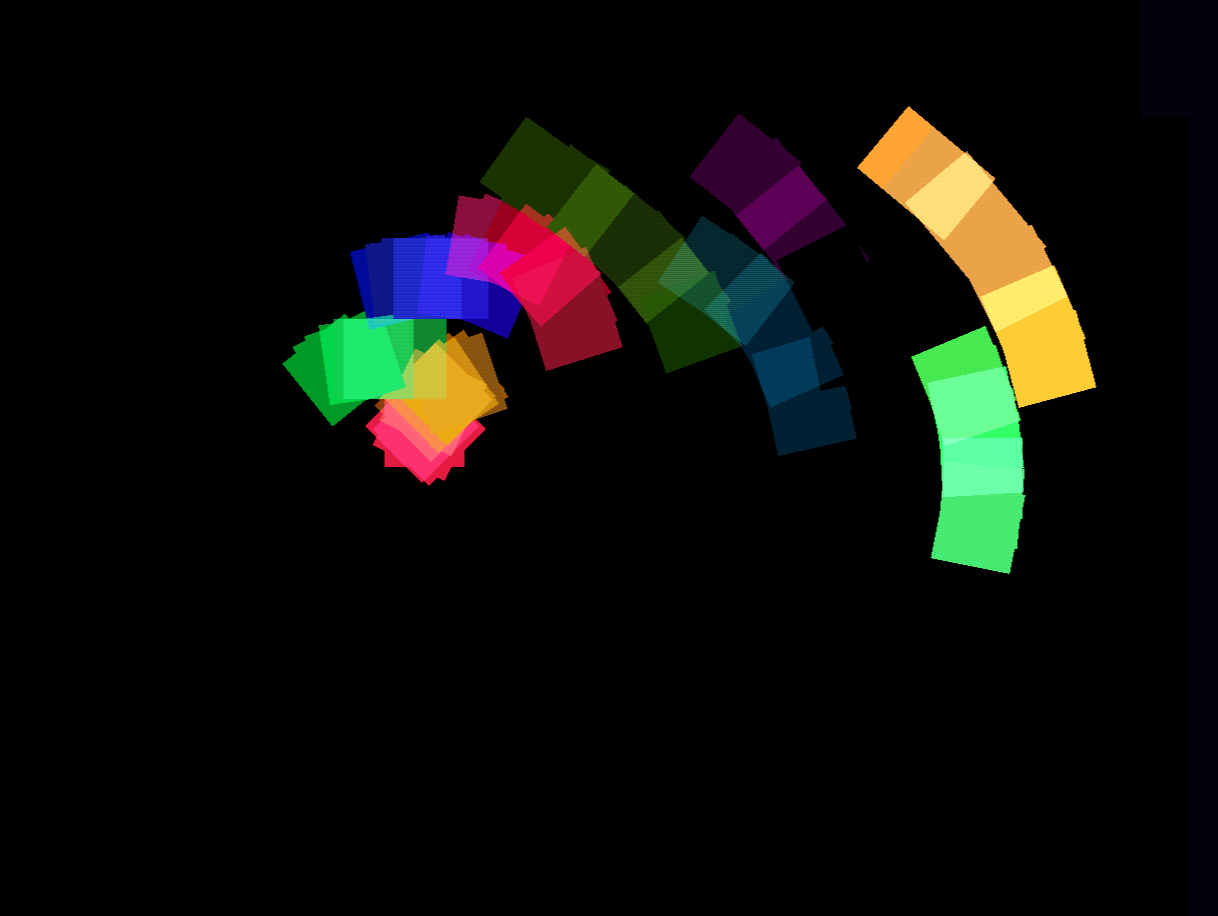
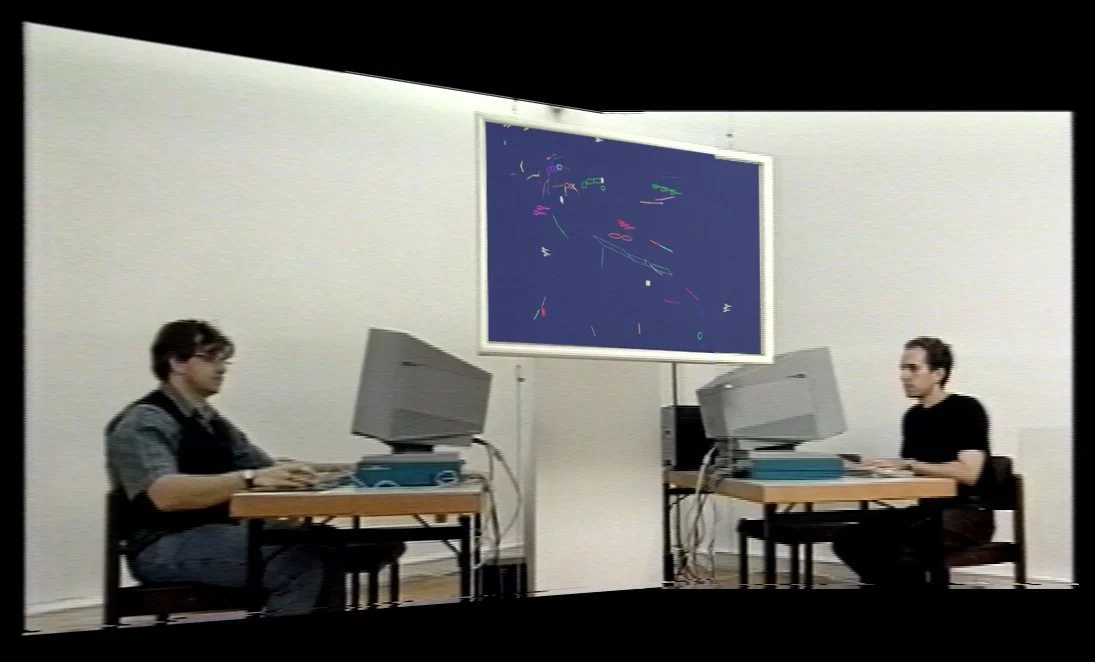
Motion Phone was Snibbe’s first exhibited work of interactive art that grew out of his study and passion of the abstract and experimental film of Oskar Fischinger, Len Lye, and Lotte Reininger. With Motion Phone, Snibbe creates a “visual instrument” for performing abstract animation like jazz, rather than composing it frame-by-frame. The piece is a one-second loop on an infinite digital canvas that people in remote locations can add more and more animated marks too, creating a shared composition and communicating with pure abstraction.
Gravilux (1997-2025)
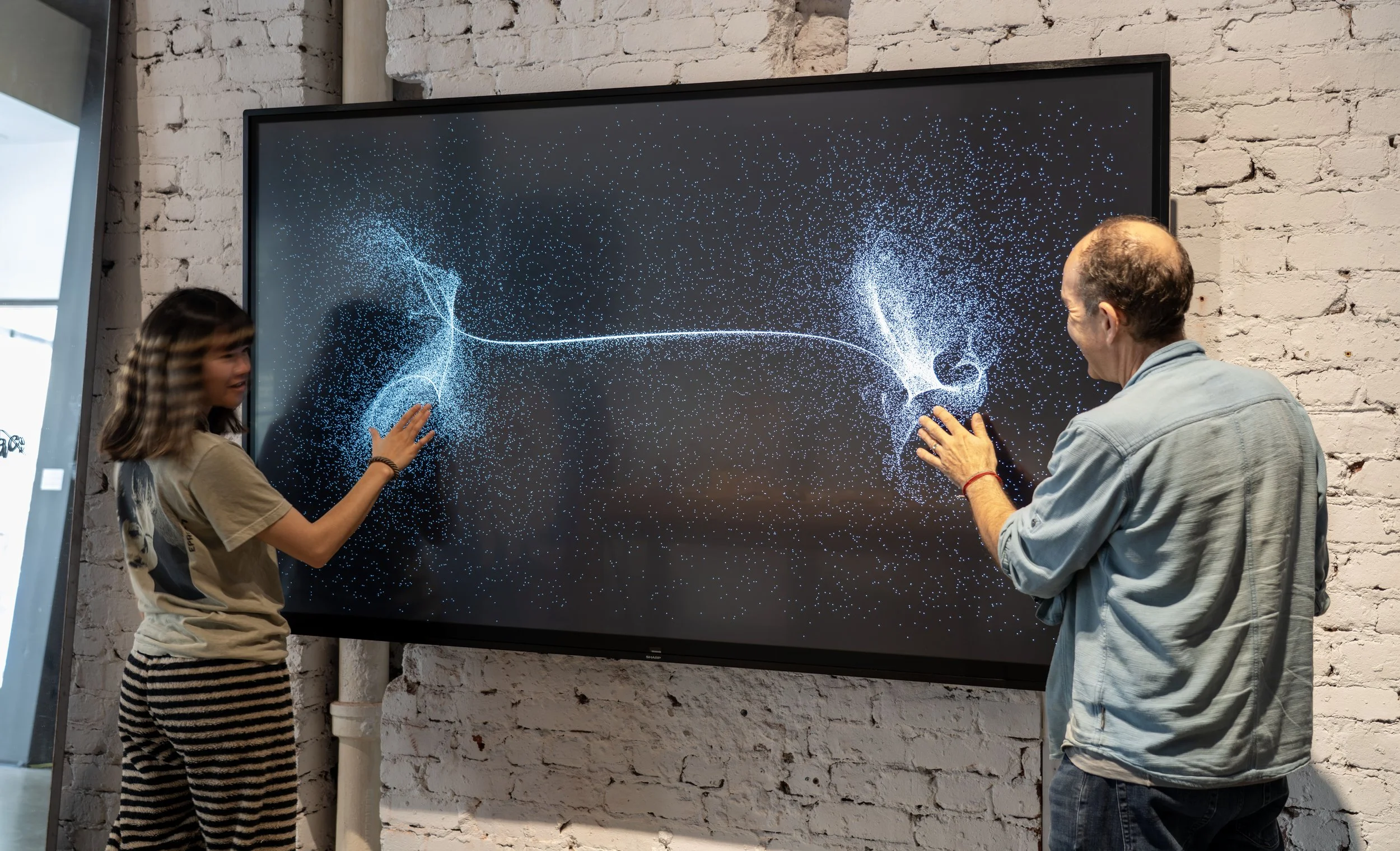
Gravilux lets you touch a simulated starfield. It is part of the Dynamic Systems Series, interactive works based on the laws of nature. Creative meditations on drawing, animation, and the mathematics underlying nature, the pieces pull you into the present moment through touch-based interaction.
Björk: Biophilia (2011)
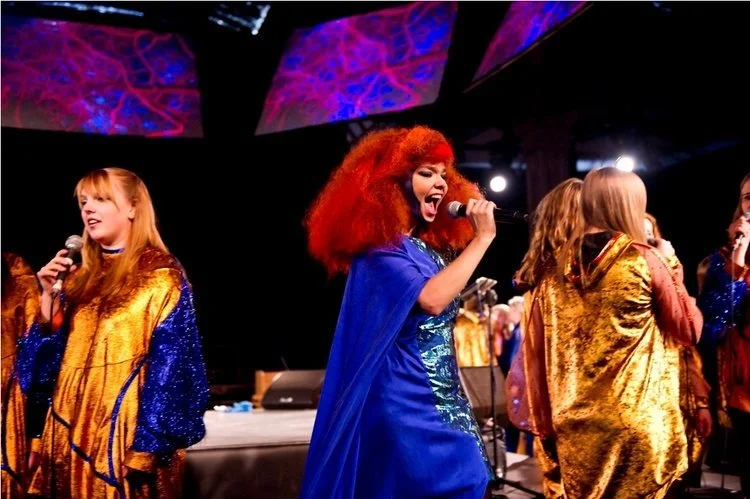
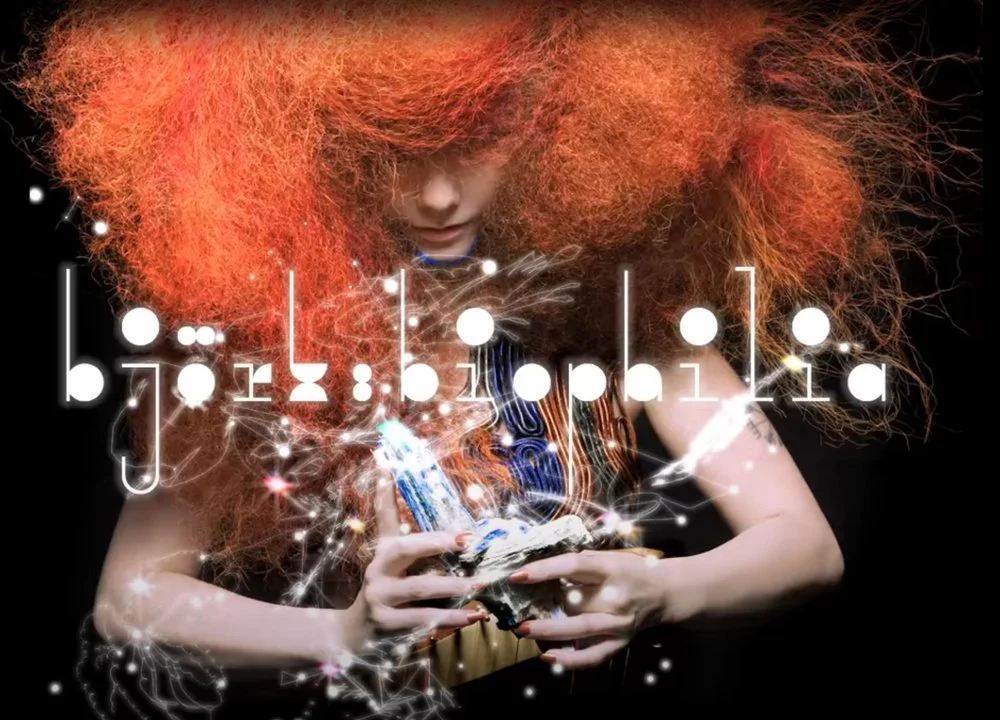
Biophilia, the world’s first app album, created in collaboration with Björk and other artists and engineers, and the first app inducted into the permanent collection of the New York Museum of Modern Art (MoMA).
Transit (2009)
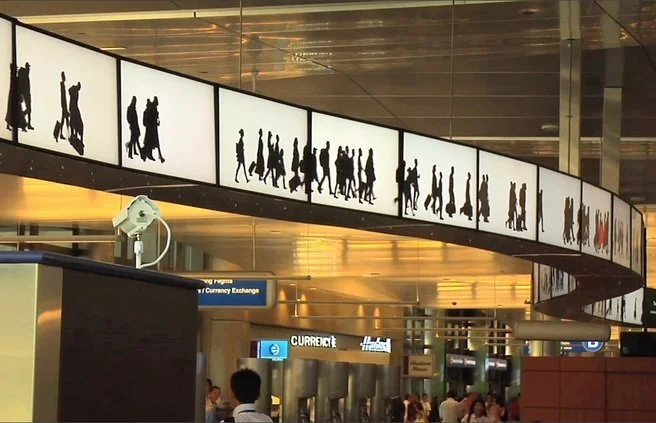
Transit is a 58-monitor video installation at the Los Angeles International Airport celebrating LA’s diversity and the potential for joy and connection—even at the airport.